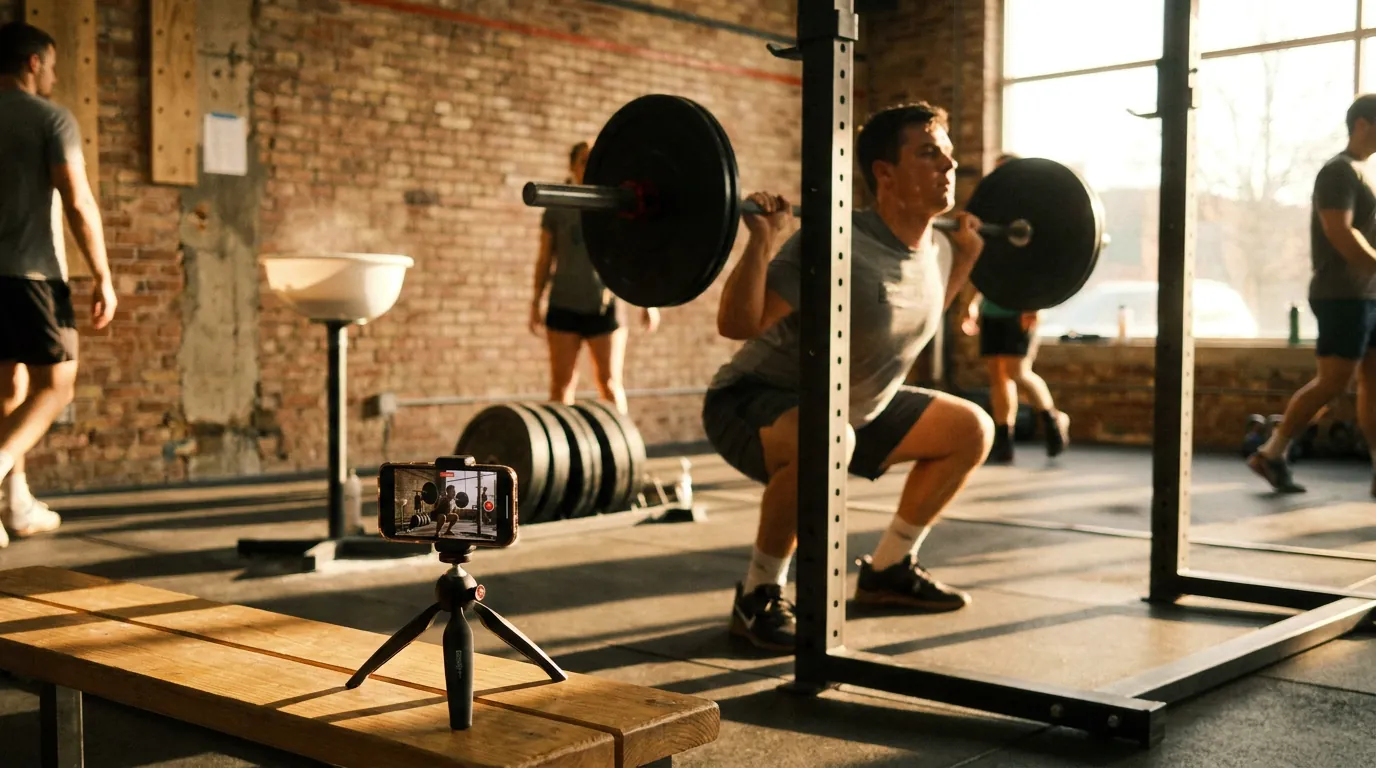
A client sends you a squat video over text. You watch it twice on a small screen, between two other clients, and type back what most of us have typed at some point: “Looks good, maybe go a bit lower.” You mark the message read and move on.
The client reads it, nods, and the next set looks exactly the same. Not because they ignored you. Because “a bit lower” was never enough to act on, and neither of you could point at the moment you actually meant.
A video form check is the practice of watching a client perform a few real working sets on video, diagnosing the one technique fault that matters most, and giving a single clear cue anchored to the exact moment it refers to, so the client can actually change the next rep. It is what separates real form coaching from a thumbs-up in a chat thread.
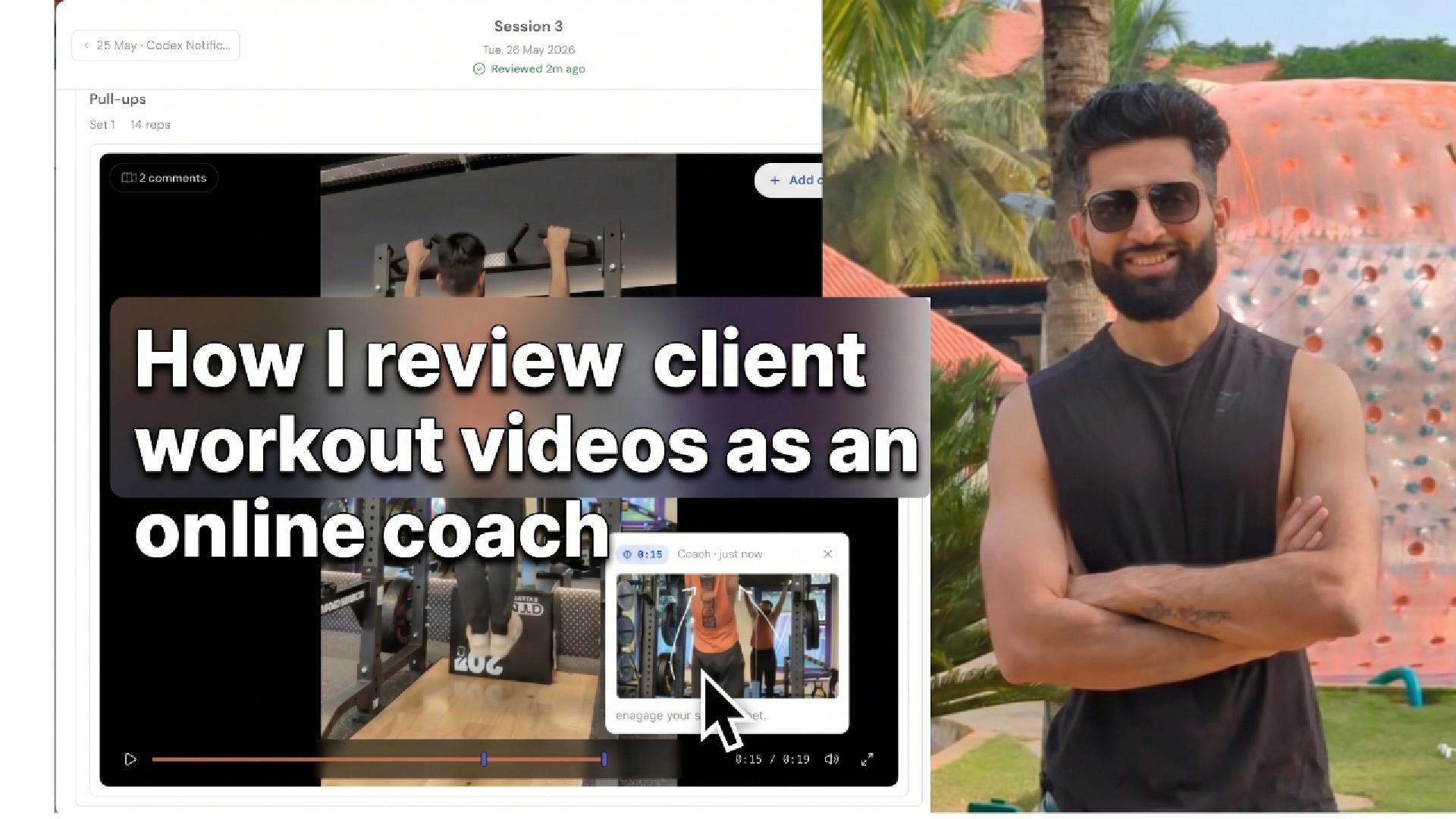
Pause the rep, draw on the frame, and pin the cue to the exact moment it refers to, instead of typing it into a chat thread. Shown in the Assistant Coach platform.
| What it is | Coaching a client’s exercise technique from video instead of in person |
| Why it matters | Form is movement; tempo, bar path, and brace cannot survive a text or a single photo |
| What to film | A couple of working sets, one steady angle, whole body in frame |
| Where coaches slip | Watching the rep but not the tempo; giving five cues; feedback not tied to the moment |
| What it changes | Faster fixes, fewer tweaks, technique that holds between sessions |
| What helps | Video pinned to the logged set, with feedback anchored to the exact frame |
| How to remember | Request the video on the exercise before the client’s next workout |
Here’s what this guide covers:
- Why you can’t fix a client’s form over text
- What a good form video actually shows you
- Ask while the exercise is still fresh
- Diagnose one thing, cue it simply, confirm it next week
- The real fix: feedback anchored to the exact moment
Why you can’t fix a client’s form over text
Form is not a position. It is a movement, and almost everything that matters about it lives in motion.
Think about what you are actually judging when you coach a lift in person. The tempo: how fast they descend, whether they rush the bottom, where the bar slows down. The bar path: does it drift forward out of the squat, or track straight. The brace: is the trunk locked before the rep starts or after it has already gone wrong. The knees: do they cave under load and then recover, or hold. The sticking point: the exact inch where the lift grinds and the fault shows itself.
None of those survive a text message, and a single photo is barely better: it freezes one instant out of a movement defined by how it changes. A clean-looking bottom position can sit right on top of a rep that was rushed, unbraced, and caving at the knees. That is why “looks good, go a bit lower” is such a common reply, and such a weak one. It is what is left when you compress a moving, three-dimensional skill into a line of text fired off between clients.
The fix is not to try harder over text. It is to get the movement itself in front of you, filmed well enough to read, and then to do the actual coaching on the video rather than around it. That handles the rep coming back. Setting the standard going in is the complementary half, which is what attaching a demo to the exercise does before the client films anything.
What a good form video actually shows you
Most form videos clients send are unusable, and it is not their fault. Nobody told them how to film one. A thirty-second clip from across the room, filmed on the warm-up weight, tells you almost nothing. So the first job is to ask for the right video.
Ask for two things: a steady camera angle, and a couple of real working sets. For most barbell and dumbbell lifts, a front-three-quarter view from about hip height shows the most in one shot. You can see depth, knee tracking, bar path, and whether the spine stays neutral, all at once. For a hip hinge like a deadlift, a straight side view reads better. Whatever the angle, the whole body stays in frame for the entire set, and the weight is a working weight. Form under an empty bar is not the form you are trying to fix.
Then watch the rep, but watch the tempo, not just the position. Play it once at normal speed to feel the rhythm of the movement. Where does it speed up, where does it stall, does the brace come before or after the descent. Then slow it down and step toward the sticking point, the exact moment the lift slows and the fault appears. That moment is where your coaching has to land.
This is the part text and photos cannot give you and a working video can. You are not looking at where the client ended up. You are watching how they got there, which is the only thing that tells you what to change.
Ask while the exercise is still fresh
The easiest form video to review is the one the client remembers to film. A request sent in a chat on Tuesday is easy to miss by Saturday’s session, especially when the client has to scroll back and remember which lift, angle, and set you meant.
Put the request where the exercise happens. Name the movement, ask for one useful angle, and keep the instruction short: “Side angle, one working set” is better than a paragraph about every detail you might inspect. The client should be able to read it while setting up and know exactly what to film.
Assistant Coach now lets you request a form video on a specific exercise. The client sees the request before the workout and again when they reach that exercise. After they attach the video to a completed workout, the request clears automatically, while the clip stays with the set and session you will review.
A good request removes the memory work. The client should not have to remember an old message, guess the angle, or work out where to send the clip.
Diagnose one thing, cue it simply, confirm it next week
Here is where most remote form coaching goes wrong, and it is not a tooling problem. It is sending the client a list.
You spot five things on the video. The knees cave, the chest drops, the depth is short, the bar drifts, the tempo is rushed. So you write all five down. The client now has five things to think about mid-set, which means they have nothing to think about, because no one can hold five cues under a heavy bar. The video gets a paragraph of feedback and the lift does not change.
Good form coaching is the opposite. You find the one fault that is limiting the lift or risking the most, and you coach that. Often the others are downstream of it, and fixing the root cleans up the rest on its own. Caving knees and a dropping chest can both come from a brace that arrives too late. Fix the brace and you may fix all three.
Then cue it simply, and cue the outcome, not the anatomy. Decades of motor-learning research point the same way: cueing the effect of a movement rather than the body part tends to produce better, more durable technique than internal “squeeze your glutes” style instructions (Wulf, 2013). “Push the floor apart” usually beats “externally rotate your hips.” “Spread the bar” beats “retract your scapulae.” Pick one cue, in the client’s language, for the one fault.
Then confirm it next week. The same lift, filmed the same way, so you can see whether the cue landed. Coaching form is a loop, not a one-off note: diagnose, cue, recheck. Skip the recheck and you never find out if anything actually changed.
The real fix: feedback anchored to the exact moment
Even when you get all of that right, the right video, the right diagnosis, the one clean cue, there is one more thing that quietly breaks remote form coaching. Where the feedback lives.
A video buried in a chat thread with a reply of “looks good, maybe go lower” is not form coaching, because the words are not attached to anything. Which rep. Which set. Which inch of the movement. The client gets a comment floating next to a clip and has to guess what moment you meant. The single most useful piece of your feedback, this exact frame, right here, is the piece a text reply throws away.
This is the gap the right tool closes. In Assistant Coach, the client logs the workout and attaches the form video to the exact set they just did. You can watch at half or quarter speed, scrub to the sticking point, pause, and capture that frame, then draw on it, mark the knee that caves or the bar that drifts, and pin your cue to that moment. You can write the cue or record it in your own voice, with the comment pinned to that moment. The client sees your mark and can read or listen to the cue on the precise instant it is about.
Plenty of platforms let you send a video message back to a client. The platforms we checked, including Trainerize, TrueCoach, Everfit, FitBudd, MyPTHub, Kahunas, and PT Distinction, mostly treat form feedback as a reply that lives beside the clip. The difference worth caring about is whether your comment is frame-accurate, timestamped, drawn on the frame, and pinned to the exact logged set, all in one place. That is the part that turns “go a bit lower” into something the client can act on. If you want to see the whole thing end to end, there is a short walkthrough of a real form review that shows the coach side and the client side together.
There is also a first-pass form-review draft, rolling out, that writes a private starting point only you see, so you can edit it into your own words before anything reaches the client. It is an assist for the coach, not an automatic message to the athlete. The judgment, the one cue, and the relationship stay yours, which is exactly where they belong.
Frequently Asked Questions
How do I do a video form check as a personal trainer remotely?
Ask for a couple of real working sets filmed from one steady angle, usually a front-three-quarter view from hip height, so you can see bar path, knees, and spine at once. Watch the whole rep for tempo, then slow down to the sticking point. Pick the one fault limiting the lift, give a single cue, and recheck it next week.
What camera angle is best for an exercise form review?
For most barbell and dumbbell lifts, a front-three-quarter angle from about hip height shows the most in one shot: depth, knee tracking, bar path, and whether the back stays neutral. A straight side view is better for the hip hinge in deadlifts and good mornings. Whatever you pick, keep the whole body in frame for the full set and film a working weight, not an empty bar.
Why isn’t a single photo enough to check a client’s form?
A photo freezes one instant, and form is movement. Tempo, bar path, the brace, how the knees track, and where the lift slows down all live in motion, and a still picture cannot show any of them. A photo of a “good” bottom position can sit on top of a rep that was rushed, unbraced, and caving at the knees. To coach technique you need to watch the rep happen, not a snapshot of one moment in it.
How many corrections should I give a client per video?
Usually one. Most form faults trace back to a single root cause, and fixing that often cleans up the rest. A client cannot hold five cues in their head mid-set, so a long list either overwhelms them or gets ignored. Find the one thing limiting the lift or risking the most, cue it simply, confirm it next week, then move to the next thing.
What’s the best form check app for an online fitness coach?
Look for one where the client attaches the video to the exact set they logged, and where your feedback is pinned to the moment it refers to instead of dropped in a chat thread. The ability to pause, draw on the frame, and have your note appear at that timestamp is what keeps the video, the set, and your feedback together in one place.
Can I just send form feedback over WhatsApp or text?
You can, but the feedback floats away from the moment it refers to. “Looks good, maybe go lower” sits in a chat thread with no link to which rep, which set, or which part of the movement you meant. The client is left guessing. Anchoring the comment to the exact frame and the exact logged set is the difference between a note they can follow and one they nod at and forget.
References
- Wulf, G. (2013). Attentional focus and motor learning: a review of 15 years. International Review of Sport and Exercise Psychology, 6(1), 77–104. Taylor & Francis
 Inside My Client Workout Form Review: 6-Minute Walkthrough Video
 Why Fitness Coaching Clients Hate Logging in Google Sheets