
Your client is all in for a week. Every meal logged, every gram weighed, the app open at the dinner table. By week three the entries get patchy. By week five the app has not been opened in days, usually right when a work trip or a rough patch made eating the hardest.
You are left with clean data on the easy weeks and nothing on the ones that actually mattered. Sound familiar?
Calorie or macro tracking means logging the weight and nutrition of everything a client eats in an app like MyFitnessPal. It genuinely works, when a client keeps it up. The trouble is that most do not, and for some clients it quietly does more harm than good.
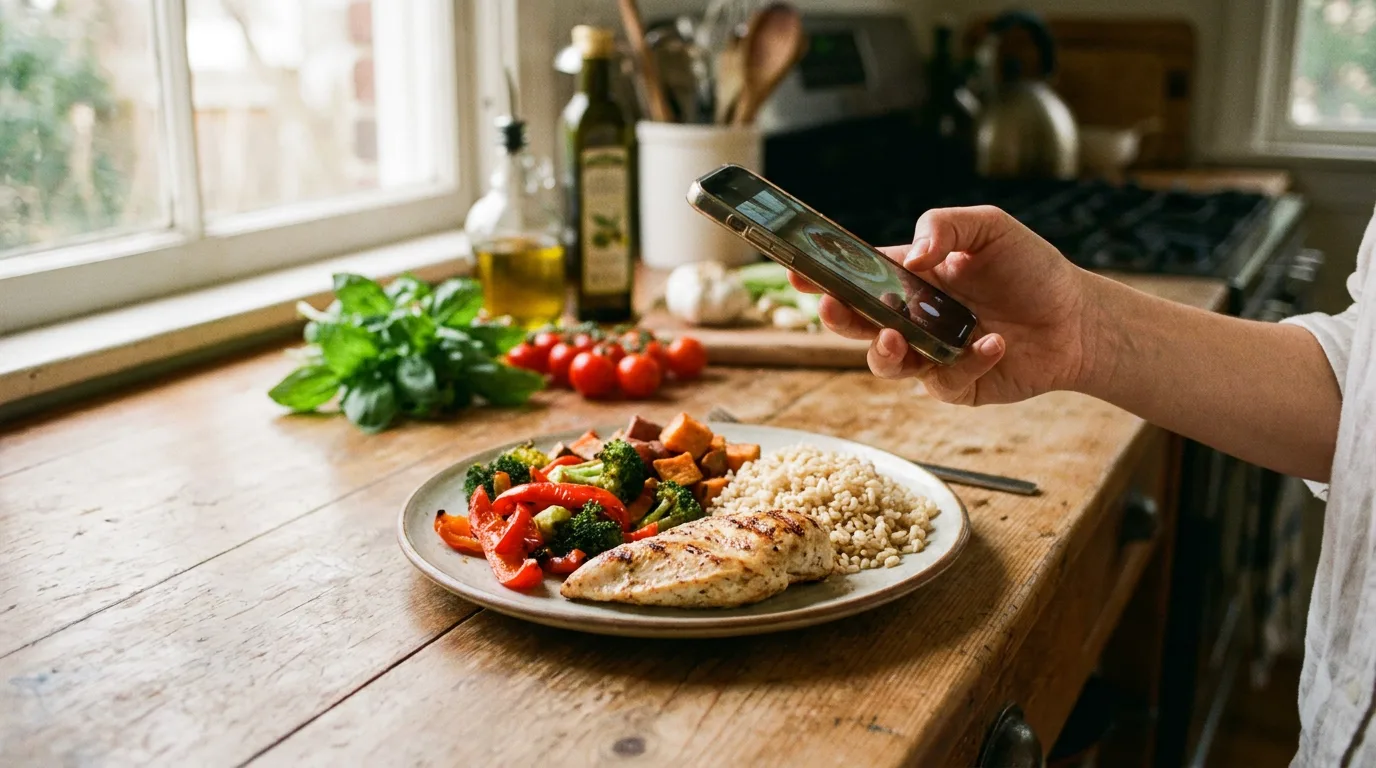
The client snaps the plate and taps the planned meal. No database, no scale. Shown in the Assistant Coach platform.
| The default | Put the client on a calorie app and have them log everything |
| Why it appeals | Self-monitoring genuinely works when a client sticks with it |
| Where it breaks | High effort, so most clients quit within weeks, often when eating gets hard |
| The hidden risk | For some clients, counting turns every meal into an anxious number |
| The simpler way | A meal photo tagged to the planned meal: lower effort, sustainable |
| What you coach | Adherence to the plan and the pattern, not decimal-point calories |
Here’s what this guide covers:
- Calorie tracking works, when clients actually do it
- Why most clients quit tracking
- For some clients, the numbers do harm
- The simpler way: coach the plate, not the number
Calorie tracking works, when clients actually do it
Let’s be fair to calorie counting first, because the instinct behind it is right.
Writing down what you eat is one of the most reliable tools in all of weight management. In a large Kaiser Permanente study, the people who kept the most food records lost about twice as much weight as those who rarely tracked (Hollis et al., 2008). The act of recording a meal makes you honest about it, catches the mindless handful of nuts, and turns vague intentions into something you can see. Self-monitoring is not a gimmick. It works.
So when a coach puts a new client on MyFitnessPal, the logic is sound. More data, more awareness, more accountability. On paper it is the obvious move.
The catch is buried in that one phrase: it works when the client does it. And “when the client does it” is doing an enormous amount of lifting. Because the same feature that makes detailed tracking powerful, the effort of logging every single thing, is exactly what makes most clients stop. The tool is effective and unsustainable at the same time, for the same reason.
Why most clients quit tracking
Think about what you are actually asking a client to do. Weigh the chicken. Look up the rice. Guess the oil the restaurant cooked in. Split the shared dessert into a number. Then do that for every meal, every day, forever. It is a second job, and it is a tedious one.
That effort would be manageable if life stayed still. It does not. Tracking is most annoying exactly when life is busiest, the work trip, the deadline week, the family thing, which is the cruel part, because those are precisely the weeks a client’s eating goes sideways and you most need to see it. The log is easy to keep when everything is calm, and the first thing to go when it is not.
So even your diligent trackers hand you a biased picture. You get detailed data on the calm, on-plan weeks and a silence over the messy ones. The weeks that would actually tell you something are the weeks the app went unopened. You are not seeing your client’s nutrition. You are seeing the easy half of it.
And that is the client who sticks with it for a while. Plenty do not last a fortnight. A tool your client abandons is not a source of data, it is a source of guilt, for both of you.
For some clients, the numbers do harm
There is a harder issue underneath the practical one, and it deserves honesty rather than a sales pitch.
For some clients, counting calories is not a neutral act. Turning every meal into a number can feed an anxious, rule-bound relationship with food. Among people with diagnosed eating disorders who had used MyFitnessPal, most, about 73 percent, felt the app had contributed to their disorder (Levinson et al., 2017).
That figure needs its context, in both directions. It does not mean calorie apps cause eating disorders. A randomized controlled trial that had low-risk young women use a calorie app for a month found no effect on eating-disorder risk, anxiety, depression, or body image (JNEB, 2021). For most people, tracking is just tedious, not dangerous.
But you often cannot tell from the outside which client is which. You do not always know who has a history, who is one stressful month away from a spiral, or who quietly ties their self-worth to a daily number. Given that, a nutrition method that does not require anyone to count is the safer default. You can always add detailed tracking later for a specific client who wants it and handles it well. Starting everyone there is the riskier bet.
The simpler way: coach the plate, not the number
Here is the reframe that makes all of this easier: you do not need calorie precision to coach nutrition. You need to see what your client actually ate, and compare it to the plan.
A photo of the plate does that. Two seconds, no database, no scale, no math, which is exactly why clients keep doing it when a calorie log would have died. And it carries context a number never could: “600 calories” tells you nothing about whether they ate the planned salmon and greens or a takeaway at the same total. The picture shows the food, the portion, and the choice, and because it is easy you get it on the hard weeks too. It is the same idea behind tracking nutrition adherence: the signal you want is the plate against the plan, not a perfect calorie total.
The last piece is tying the photo to the plan so it is coachable at scale. In Assistant Coach, a client snaps a meal from their client app and taps which planned meal it is. It lands in your queue lined up against the meal you built. If you want a numbers read, Assistant Coach drafts a coach-only AI estimate: rough calorie and macro ranges, how the meal deviates from the plan, and a per-ingredient breakdown, so you get the macros without your client ever counting one. It is a draft you review and edit, and the client just takes a photo and sees your reply. It sits with the client’s meal plan, check-ins, workout logs, and goals, not in a calorie database you never see. The client does the easy thing, and you still get the signal.
None of this means detailed tracking is wrong. For the client who loves the numbers and thrives on them, let them track. But make it the exception you offer, not the default you impose. For most clients, the plate is enough.
Frequently Asked Questions
Do my clients have to count calories to get results?
No. Calorie counting is one way to build awareness, but a poor fit for many clients. What drives results is consistently eating close to a sensible plan, and you can coach that from meal photos and habits without a single number. Reserve detailed tracking for the clients who genuinely want it.
What’s a good MyFitnessPal alternative for coaching clients?
For most clients the better tool is not another calorie database, it is a lighter way to show you what they ate. A quick meal photo tagged to the planned meal gives you portion size, food choices, and adherence without weighing food or searching a database. It is far more sustainable, which is the point, because a tool your client abandons in three weeks tells you nothing.
How do I coach nutrition without tracking macros?
Set a clear plan, then coach adherence to it instead of chasing exact numbers. Ask for a few meal photos a week, especially the meals clients find hardest, and compare each to what you planned. You are looking for the pattern, on plan or off, not a precise calorie total.
Is calorie counting bad for clients?
For most people it is not harmful, and a randomized trial found a month of calorie counting did not worsen mental health or eating-disorder risk in low-risk women. But it is not neutral for everyone: among people with diagnosed eating disorders, most who used a calorie app felt it contributed. For any client with a history or a fragile relationship with food, a method that does not turn every meal into a number is the safer default.
Why do clients stop using calorie-tracking apps?
Friction. Weighing food and searching databases is a second job, and most tedious exactly when life gets busy, which is when eating gets hardest. So clients log well on the easy weeks and quietly stop on the hard ones, leaving you the data you needed least. A two-second photo survives real life in a way gram-by-gram logging does not.
How do I keep clients accountable on nutrition without an app?
Give them one small, repeatable action and make it easy. A quick photo of a few meals a week, tagged to the plan, keeps a client honest and gives you something real to coach from. Accountability comes from the client knowing you will see the meal, not from the precision of the log.
References
- Hollis, J. F., et al. (2008). Weight loss during the intensive intervention phase of the weight-loss maintenance trial. American Journal of Preventive Medicine, 35(2), 118–126. Summary via ScienceDaily
- Levinson, C. A., Fewell, L., & Brosof, L. C. (2017). My Fitness Pal calorie tracker usage in the eating disorders. Eating Behaviors, 27, 14–16. PubMed Central
- Introducing dietary self-monitoring to undergraduate women via a calorie counting app has no effect on mental health or health behaviors. (2021). Journal of Nutrition Education and Behavior. PubMed Central
 Nutrition Adherence for Personal Trainers: A Coach's Guide
 How to Build a Client Meal Plan That Actually Gets Followed