You built the nutrition plan. Macros set, meals mapped out, the client nodded along on the onboarding call. Six weeks later the weight has stalled, and you are staring at a check-in trying to work out why.
So you ask the question every coach asks: “How’s nutrition going?” And you get the answer every coach gets: “Yeah, pretty good, mostly on track.” You have no way to know if that is true, so you guess, adjust something, and hope.
Nutrition adherence is how consistently a client actually eats the plan you set, which gets far easier when the plan is built from foods the client actually recognizes. For most coaches it is the single biggest blind spot in the whole relationship. You can see their training, their weight, their measurements, and their check-in answers. The one thing you cannot see is the plate, which is the thing that decides whether any of the rest of it moves.
Each meal, read against the plan you built. Adherence at a glance. Shown in the Assistant Coach platform.
| What it is | Seeing whether a client actually eats the nutrition plan you set, not just what they weigh |
| Why it matters | Adherence, not the diet itself, is the strongest predictor of whether a client gets results |
| The weak signals | A weigh-in (noisy, lagging) and “how did nutrition go?” (optimistic, vague) |
| The strong signal | A quick photo of the real plate, tagged to the planned meal |
| Where coaches slip | Making clients count calories, then losing them when they quit the app |
| What it changes | You spot drift between check-ins and coach the behaviour, not the aftermath |
Here’s what this guide covers:
- Why you can’t coach nutrition you can’t see
- Why “how did nutrition go?” is a weak signal
- The fix isn’t more tracking, it’s the right signal
- Close the loop: see the meal against the plan
Why you can’t coach nutrition you can’t see
The thing that decides your client’s results is the thing you have the least visibility into.
Adherence is what matters. In a well-known JAMA trial across four different diets, how closely someone stuck to their diet predicted weight loss far better than which diet they were on (Dansinger et al., 2005). The best macro split does nothing if the client eats off-plan four nights a week.
So the real job is not writing a better plan. It is knowing whether the plan is being followed, and adjusting from there: prescribe, observe, adjust.
Most coaches only ever close half of that loop. You prescribe in detail, then go blind between check-ins. The one number you do get, the scale, is a poor stand-in: it moves with water, sodium, carbs, and sleep, and it lags, so by the time a stall shows up the off-plan pattern has been running for weeks. It is especially treacherous for clients on GLP-1 medications, where much of the lost weight can be muscle (more in why the scale misleads coaches).
You cannot coach a behaviour you cannot see. For most coaches, nutrition is that behaviour.
Why “how did nutrition go?” is a weak signal
The obvious workaround is to just ask. Most check-in forms have a version of “how did your nutrition go this week?” It feels like data. It mostly is not.
The problem is not that clients lie. People are genuinely bad at reporting what they eat, even when trying to be honest. In a classic New England Journal of Medicine study, subjects who struggled to lose weight under-reported their intake by about 47 percent and over-reported their activity by about 51 percent (Lichtman et al., 1992).
Then add how a check-in gets filled out: Sunday night, from memory, and memory favours the meals they are proud of. The Tuesday takeaway fades; the Monday salad stays sharp. “Mostly on track” is what an optimistic memory of a messy week looks like.
So the answer tells you how the client feels, which is worth knowing, but not what they ate. Adjust macros off “pretty good” and you are tuning against a number that is off by half. The signal you need is the plate, not a remembered summary.
The fix isn’t more tracking, it’s the right signal
The instinct is to reach for more tracking: put the client on a calorie app and log every gram. And self-monitoring does work. In a large Kaiser Permanente study, the people who kept the most food records lost about twice as much weight as those who rarely tracked (Hollis et al., 2008).
But every coach has lived the catch: detailed logging is high-effort, and high-effort habits die. Diligent for a week, sloppy by week three, app unopened by week five, usually right when eating gets hard. You get perfect data on the easy weeks and nothing on the ones that matter, which is why so many clients quit calorie tracking. For some it also turns eating into an anxious numbers game.
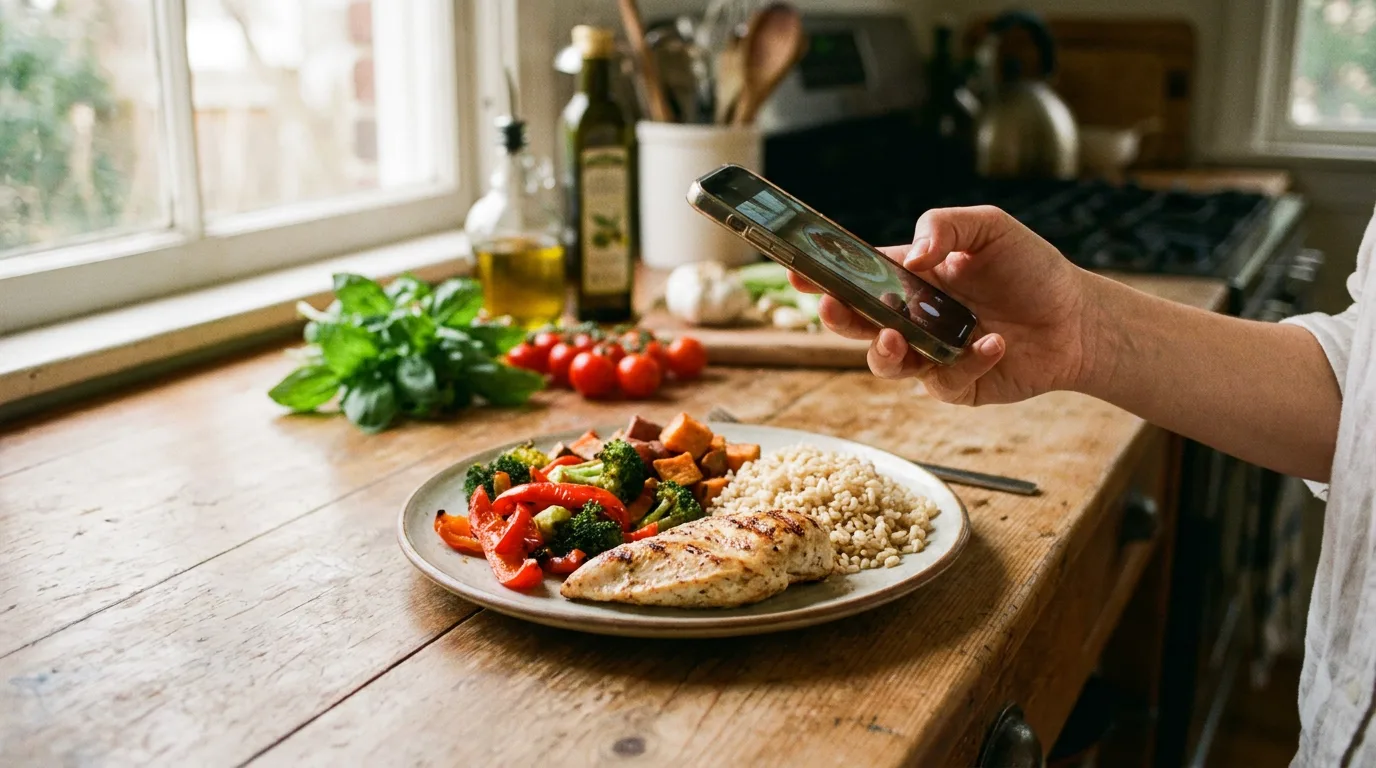
You do not need calorie precision to coach adherence. You need to see the plate. A quick photo, tagged to the meal you planned, answers the question that matters, did this match the plan, without the client weighing a thing. It shows portion size, food choices, and context a number never could: they ate out, they swapped the rice for chips. And because it takes two seconds, clients keep doing it.
A few honest meals a week, especially the hard ones, beats a perfect food diary that stops after four days. Consistency is the whole game, and photos make it realistic.
Close the loop: see the meal against the plan
Seeing the plate solves half the problem. The other half is context: a photo of someone’s dinner still leaves you comparing it, in your head, against a plan you wrote weeks ago. Across thirty clients, that stops being realistic.
This is where the plan you already built becomes the yardstick. In Assistant Coach, a client photographs a meal from their client app, taps which planned meal it is, and adds a quick note. It lands in your queue already lined up against that meal, and Assistant Coach drafts a coach-only AI read: how the plate compares to the plan (on plan, lighter, heavier, or off), estimated calorie and protein/carb/fat ranges, and a per-ingredient breakdown of what is driving them. It is a draft, not a verdict. You review it, adjust anything, and reply in your own words, and the client only ever sees the reply you write. The photos sit with the client’s meal plan, check-ins, workout logs, and goals, not scattered across a chat thread.
The problem was never that clients won’t share food photos. It is that a loose photo with no plan attached is not something you can coach from at scale. (For the practical version, here is how to run meal photo check-ins.) Anchoring the photo to the planned meal is what turns a nice gesture into an adherence signal, the same way anchoring a cue to the exact rep is what makes video form review coachable.
You still make every call. The plan is yours, the read is a starting point, and the reply that reaches the client is in your voice. What changes is that you are coaching nutrition from what is on the plate, not from a stalled weigh-in and a hopeful “mostly on track.”
Frequently Asked Questions
How do I know if my clients are following their nutrition plan?
Weigh-ins and a “how did nutrition go?” question are weak signals: weight is noisy and self-report is optimistic. The most reliable low-effort signal is a quick photo of what the client actually ate, tagged to the meal you planned, so you see the real plate instead of a remembered summary. Look for the pattern over the week, not a perfect calorie count.
Do my clients have to count calories or track macros to log nutrition?
No, and most should not have to. Calorie logging is high-effort and clients quietly abandon it, whereas a photo of the plate, tagged to the planned meal, gives you the adherence signal with a fraction of the effort. You can still add macro targets for the clients who want them.
How can I track client nutrition adherence without MyFitnessPal?
Ask for a meal photo instead of a food-database entry. A photo tagged to the planned meal shows you portion size, food choices, and whether the plate matches your plan, with no barcodes or gram weights. It gives you context a calorie number never could, like a takeaway or a swapped side.
Isn’t asking clients for meal photos too much work for them?
It is far less work than logging every gram, which is why photo logging sticks where calorie tracking fails. A picture of a plate takes two seconds, with no lookup, scale, or math. Aim for a few meals a week, not every bite.
How often should clients log their meals?
You do not need every meal. A handful across the week, especially the ones clients find hardest, tells you most of what you need. Three honest photos a week for two months beats logging everything for four days and then stopping.
Why isn’t the scale enough to tell me if nutrition is on track?
Weight swings with water, sodium, carbs, and sleep, so one week’s number can move for reasons unrelated to adherence, and it lags. Seeing the actual meals shows you the behaviour driving the trend, so you can adjust before a stall shows up.
References
- Dansinger, M. L., et al. (2005). Comparison of the Atkins, Ornish, Weight Watchers, and Zone diets for weight loss and heart disease risk reduction. JAMA, 293(1), 43–53. PubMed
- Lichtman, S. W., et al. (1992). Discrepancy between self-reported and actual caloric intake and exercise in obese subjects. New England Journal of Medicine, 327(27), 1893–1898. PubMed
- Hollis, J. F., et al. (2008). Weight loss during the intensive intervention phase of the weight-loss maintenance trial. American Journal of Preventive Medicine, 35(2), 118–126. Summary via ScienceDaily
 Why the Scale Misleads Fitness Coaches (and What to Track Instead)
 How to Build a Client Meal Plan That Actually Gets Followed