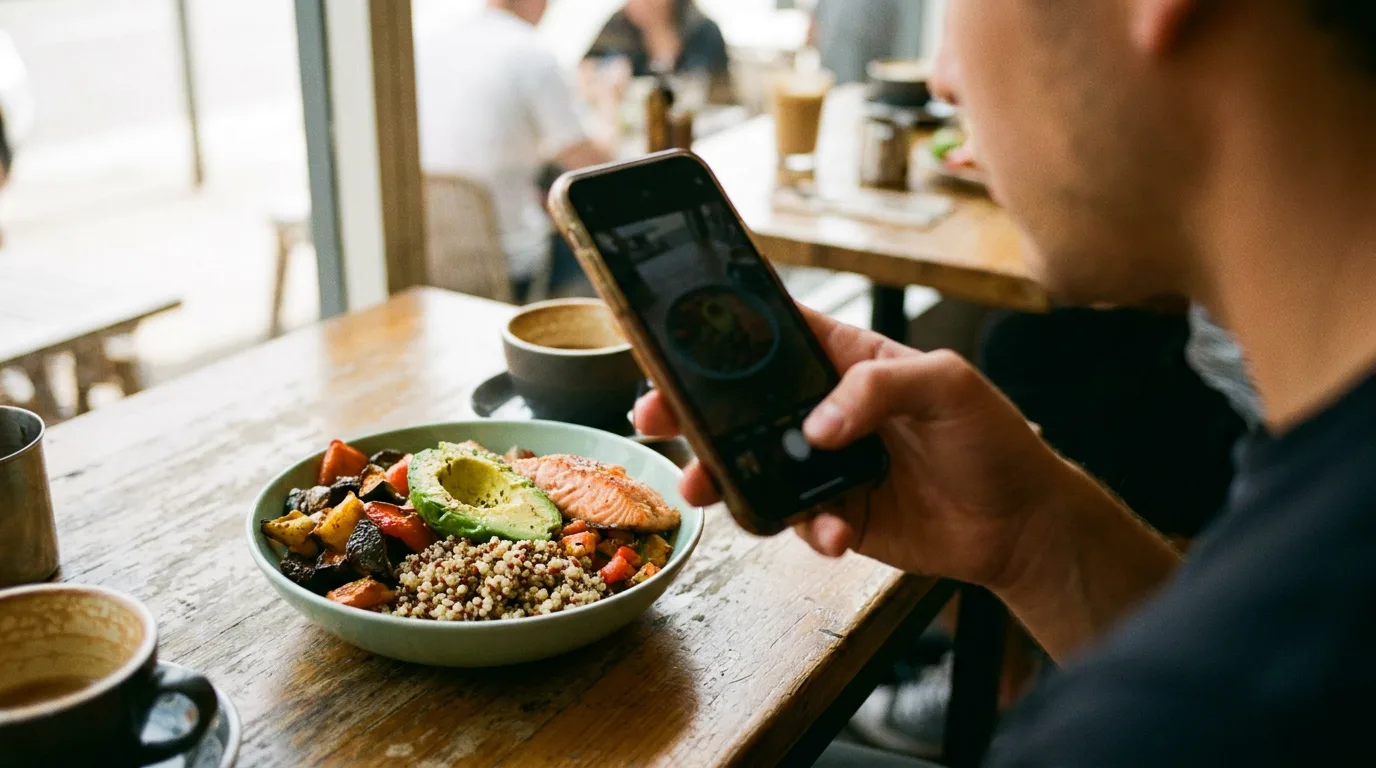
You already get the occasional meal photo from a client. A plate of chicken and rice appears in the chat on a Tuesday, usually with “is this okay?”, squeezed between a question about Saturday’s session and a gym selfie. You glance at it, type “looks good,” and it scrolls away.
That instinct, the client showing you their food, is exactly right. It is just wasted when it is random, contextless, and lost in a thread. Turn it into a system and it becomes one of the most useful nutrition tools you have.
A meal photo check-in is a client photographing what they eat and sending it to their coach, tagged to a planned meal, so you can see and respond to the actual food instead of a written summary. It is a lighter, more sustainable alternative to calorie logging, and for most clients it is a better one.
Snap the plate, tag the planned meal, and it is yours to coach. Shown in the Assistant Coach platform.
| What it is | Clients photograph meals, tagged to the plan, so you see real eating |
| Who it’s for | Most clients, especially those who bounce off calorie apps |
| What to ask for | A few meals a week, the hard ones, honest not styled |
| How to read it | Protein present, portion vs plan, on plan or off, pattern over the week |
| How to reply | Short, specific, one nudge, lead with the win |
| What makes it work | The photo tied to the planned meal, kept with the client’s record |
Here’s what this guide covers:
- What to ask clients to photograph
- How to read a meal photo fast
- How to respond so it changes behaviour
- Make it a habit, not a chore
What to ask clients to photograph
The first mistake coaches make with meal photos is asking for all of them. Every meal, every day, photographed and sent. That is calorie logging with extra steps, and it dies just as fast.
You do not need every meal. You need the ones that tell you something. Ask for a handful across the week, and steer the client toward the meals that actually decide adherence: the ones eaten out, the weekend meals, the late dinner after a long day, the breakfast they usually skip. A week of perfectly on-plan lunches photographed at their desk tells you far less than the three meals where things tend to go sideways.
Set two rules with the client. First, honesty over styling: a real photo of the actual plate, not a curated one. Second, add a quick note when the photo cannot show something, like a bigger-than-it-looks portion or chicken that was fried not grilled. Self-monitoring is one of the most reliable tools in weight management, with consistent food-recorders losing about twice as much as those who rarely do (Hollis et al., 2008), but only if the record is honest and sustainable. A few true photos beat a wall of flattering ones.
How to read a meal photo fast
A meal photo is only useful if reading it takes seconds, because you are doing it across a roster, not for one client. The trick is to compare, not to count.
Do not try to estimate calories from the picture. Instead, run the same quick three-point read every time. Is there a real protein source on the plate, and is it a proper portion or a token amount. Is the overall portion close to what you programmed, or noticeably bigger or smaller. And did they follow the plan or swap something, the planned sweet potato showing up as chips, the salad that turned into a side of bread. That is it. On plan, off plan, or somewhere in between.
Then read the week, not the meal. One off-plan dinner is noise. The same swap showing up four times is a pattern, and patterns are what you coach. A client whose photos are consistently protein-light has a problem you can name and fix. A client who nails it all week and blows out one Friday does not. Seeing the nutrition adherence pattern across the week is the entire point, and it is why a photo beats a check-in slider that just says “7 out of 10.”
How to respond so it changes behaviour
Here is where meal photo check-ins are won or lost, and it is not about nutrition knowledge. It is about how you reply.
The failure mode is the essay. The client sends a photo, you spot four things wrong, and you send back a paragraph of corrections. The client feels judged, the next photo is a little more curated, and a few weeks later the photos stop. You optimised one meal and lost the whole habit.
Do the opposite. Keep it short and anchor it to the meal in front of you. Lead with what went right, because adherence is fragile and encouragement keeps the photos coming: “great protein on this one.” Then offer a single nudge, not a list: “next time swap the white rice for the sweet potato we planned.” One meal, one win, one small ask. And never reach for calorie numbers or good-food-bad-food language, which turns a coaching moment into guilt. You are shaping a habit over months. Warmth and specificity do that; lectures do not.
Make it a habit, not a chore
Everything above only works if the client actually keeps sending photos, so the last job is to make the habit almost effortless.
Keep the ask tiny and fixed: a few meals a week, not a photo diary. Make the logging itself a single action, because every extra tap is a reason to stop. And close the loop reliably, so the client knows the photo is actually seen. A meal photo that vanishes into a chat thread with no reply teaches the client it does not matter. A quick, warm response teaches them it does.
This is where a tool built for it helps. In Assistant Coach, the client photographs a meal from their client app and taps which planned meal it is, and it lands in your queue lined up against the meal you built, and Assistant Coach drafts a coach-only AI read: how it deviates from the plan, estimated calorie and macro ranges, and a per-ingredient breakdown. You review the draft, edit anything, and reply in your own words, so the AI does the first pass and you stay the coach. Lightweight previews keep the meal journal and feedback quick to browse on a weaker connection, while the full photo opens when you choose it. The photos stay with the client’s meal plan, check-ins, and history rather than scattering across chat. The client does one easy thing, you see the plate against the plan, and the habit has somewhere to live, instead of a stray meal pic you type “looks good” under.
Frequently Asked Questions
What is a meal photo check-in?
It is a client photographing what they eat and sending it to their coach, ideally tagged to a planned meal, so you can see and respond to the actual food instead of a written summary. The client snaps the plate, you read it against the plan and reply. The goal is a picture of real eating over a week, not a perfect calorie count.
How many meals should a client photograph a week?
Fewer than you think. A handful of representative meals, especially the ones the client finds hardest, tells you most of what you need. Three honest photos a week for months beats every meal for four days before the client burns out.
How do I read a client’s meal photo quickly?
Compare it to the plan, do not count it. In a few seconds check three things: is there a real protein source, is the portion close to what you programmed, and did they follow the plan or swap something. Read the week as a pattern rather than reacting to any single meal.
Do meal photos replace calorie tracking?
For most clients they are a better fit, because they are far easier to sustain and show context a number cannot, like a takeaway or a missing protein. Detailed tracking still suits the minority who genuinely want the numbers. For everyone else, a photo tagged to the plan gives you the adherence signal without weighing food or logging grams.
How do I give nutrition feedback without making the client feel judged?
Keep it short, specific, and lead with what went right, because adherence is fragile and shame kills it. Anchor the note to the meal, praise the win, then offer one small nudge rather than a list of corrections. Never call out calories or use good-food-bad-food language.
What’s the best way to collect meal photos from coaching clients?
The problem with meal pics in a chat thread is that they float free of the plan and get lost between messages. The better setup lets the client tag each photo to a planned meal so it arrives with context, and keeps the photos with the client’s plan, check-ins, and history in one place. That is the difference between a nice gesture and something you can coach from at scale.
References
- Hollis, J. F., et al. (2008). Weight loss during the intensive intervention phase of the weight-loss maintenance trial. American Journal of Preventive Medicine, 35(2), 118–126. Summary via ScienceDaily
 Nutrition Adherence for Personal Trainers: A Coach's Guide
 Nutrition Coaching Without Calorie Counting: A Coach's Guide