Your client started a GLP-1 last month, and the weight is falling off. Down four pounds this week, down again the week before. They are thrilled. You are thrilled.
What neither of you can see is that they are eating maybe 900 calories a day, most of it toast and fruit, almost no protein, and the muscle they built with you is quietly leaving. The scale says everything is working. The plate says it is not. And the plate is the one thing you cannot see.
For clients on GLP-1 medications like Ozempic, Wegovy, and Mounjaro, the appetite suppression that drives the weight loss also makes nutrition the thing you most need to watch and the thing you are least able to see. It is the exact situation where flying blind on the plate costs the most.
This is educational content for coaches, not medical advice. Your GLP-1 clients should follow their prescriber’s guidance. Your role is training, nutrition coaching, and accountability, not managing medication.
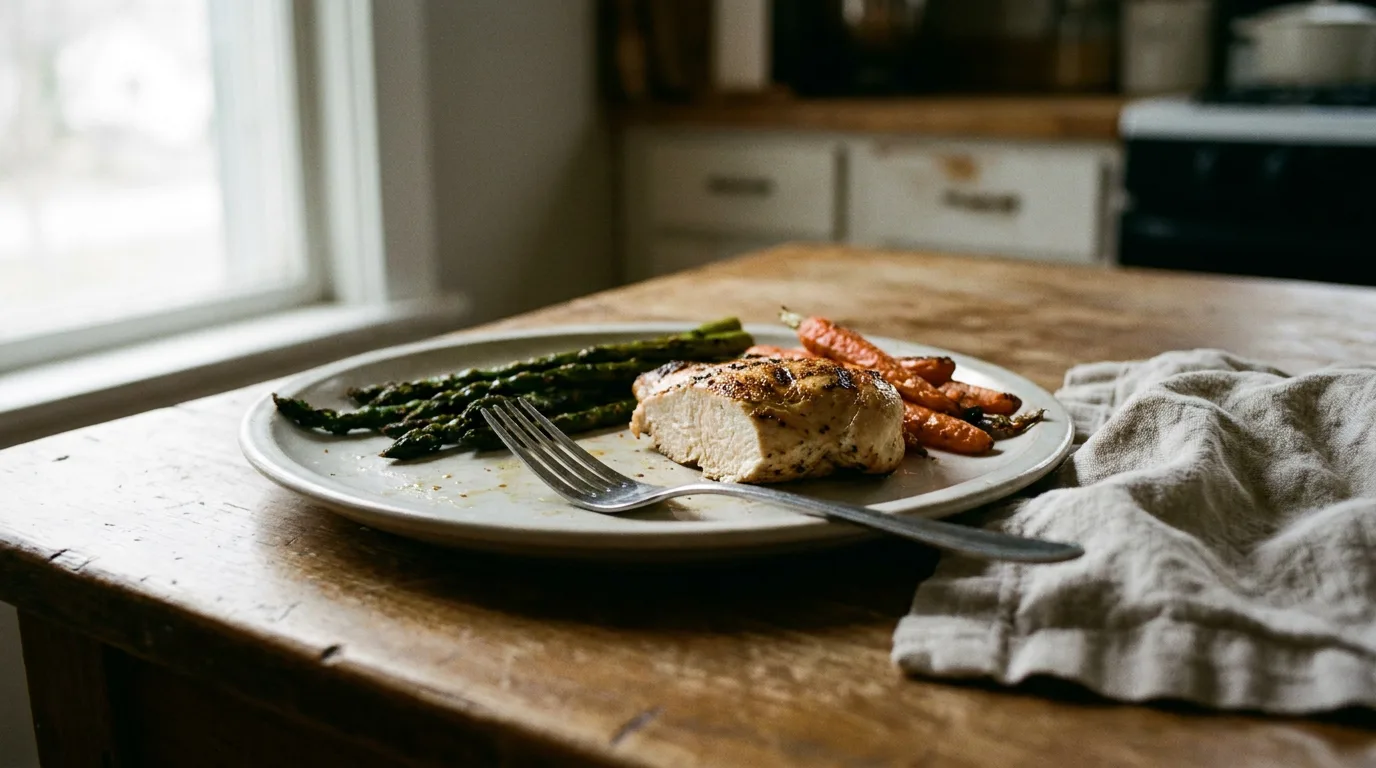
Each meal against the plan, so you can see if the protein is actually there. Shown in the Assistant Coach platform.
| The client | On a GLP-1 (Ozempic, Wegovy, Mounjaro); appetite strongly suppressed |
| The good news | Weight is dropping fast, and everyone is happy |
| The hidden problem | Much of that loss can be muscle, and protein intake is often far too low |
| Why you’re blind | The scale looks great, and clients can’t self-report intake accurately |
| What you need to see | The actual plate: is there protein, and how big is the portion |
| What it changes | You catch under-eating early and protect the muscle, not just the weight |
Here’s what this guide covers:
- On a GLP-1, the scale lies twice
- Your GLP-1 client can’t tell you what they ate
- What matters now is protein on the plate
- Close the loop: see the meals, protect the muscle
On a GLP-1, the scale lies twice
Every coach knows the scale is a noisy signal. On a GLP-1 client it is worse than noisy. It is actively misleading, in a way that feels like success.
A large share of the weight lost on these medications is not fat. A DXA sub-study of the STEP 1 semaglutide trial found roughly 40 percent of the weight lost was lean body mass, and a systematic review put lean mass losses at 39 to 45 percent of total weight lost (Wilding et al., 2021). Slower dieting usually pulls about 25 percent from lean tissue; the drugs push that higher, because the weight comes off fast and intake drops hard.
So picture a client down 30 pounds. If 40 percent is lean mass, that is 12 pounds of muscle gone, months of your programming reversed, hidden under a weigh-in that looks like a triumph. Losing muscle and losing fat move the scale in the same happy direction, so the number you would normally trust is the one most likely to fool you. It is the scale problem at its most dangerous.
You cannot manage this from the scale. You have to see what is actually going in.
Your GLP-1 client can’t tell you what they ate
The obvious fix is to ask. On a GLP-1 client, asking fails harder than usual, for a specific physiological reason.
These medications work by blunting appetite and hunger signals. But those same cues are how people gauge how much they have eaten. Take them away and a client loses the internal sense of “I ate enough today,” so when you ask “are you getting your protein in?” and they say “yeah, I think so,” they genuinely cannot answer accurately, and they tend to overestimate.
Layer that on the ordinary problem with self-report and the check-in answer becomes almost useless here. “Eating enough protein” is not something they can tell you. It is something you have to see.
And the stakes are higher. A regular client who under-reports still eats when hungry. A GLP-1 client with no appetite can drift into eating far too little, and far too little protein, for weeks while the muscle goes. The clients most at risk of invisible under-eating are the ones least able to report it.
What matters now is protein on the plate
For a GLP-1 client, the nutrition question narrows to something concrete: is there enough protein, and is there enough food, on the actual plate.
The target is not exotic. For clients doing resistance training, the International Society of Sports Nutrition puts protein at 1.6 to 2.2 grams per kilogram of body weight per day, and adequate protein plus resistance training is the best-evidenced way to preserve muscle while losing weight. For an 80 kg client that is roughly 128 to 176 grams a day. The number is not the hard part. Hitting it on a suppressed appetite is, and knowing whether they hit it is harder still.
This is why seeing the plate beats every other signal for these clients. A photo answers the two questions that matter at a glance: is there a real protein source, and is the portion big enough to count. “Chicken and veg” that turns out to be three forkfuls of chicken is exactly the failure mode you are watching for, and it is invisible in a weigh-in. The full programming and protein playbook is in our GLP-1 guide for coaches; this piece is about the part you have to see for any of it to work.
Close the loop: see the meals, protect the muscle
Seeing the plate is the whole game with these clients, so the practical question is how to see it without adding a burden to someone who already feels rough.
A quick photo is about the only ask a nauseous, appetite-suppressed client will actually keep up. And it gets far more useful when the photo is tied to the plan you set. In Assistant Coach, a GLP-1 client photographs a meal from their client app and taps which planned meal it is. It lands in your queue lined up against the protein-forward plan you built, and Assistant Coach drafts a coach-only AI read: estimated protein (with calorie, carb, and fat ranges), how the meal deviates from the plan, and a per-ingredient breakdown, so a protein gap jumps out at a glance. You review the draft, adjust anything, and reply in your own words, and the client only sees your reply. It sits with the client’s meal plan, check-ins, and workout logs, so the meals, the training, and the body-composition trend live in one place instead of scattered across a chat thread.
That is what lets you act early. A run of photos with no protein is a signal you catch in week two, not in a DXA scan three months later. You adjust the plan, nudge in a protein shake, and protect the muscle while the medication does its job on the fat. It is the same principle as tracking nutrition adherence for any client, it just matters more here, because the client who most needs their nutrition watched is the one who can least tell you about it.
The medication is doing the appetite work. Making sure the weight that comes off is fat and not the muscle your client built, that is still your job, and you can only do it if you can see the plate.
Frequently Asked Questions
Why do GLP-1 clients lose muscle?
GLP-1 medications suppress appetite, so clients eat far less, and rapid weight loss on a low intake pulls a large share of weight from lean tissue. A DXA sub-study of the STEP 1 trial found roughly 40 percent of the weight lost was lean mass, versus about 25 percent for slower dieting. Resistance training and enough protein are what protect muscle, which is why what the client eats matters so much.
How much protein should a client on Ozempic or Wegovy eat?
The International Society of Sports Nutrition recommends 1.6 to 2.2 grams of protein per kilogram per day for clients doing resistance training, so roughly 128 to 176 grams for an 80 kg client. The hard part on a GLP-1 is that appetite is suppressed, so hitting it takes deliberate effort and eyes on what they actually eat. This is educational guidance, not a prescription.
Why can’t I trust my GLP-1 client’s weigh-in?
Because the scale can be dropping while muscle is quietly leaving. On a GLP-1 a large fraction of lost weight can be lean mass, so a great weekly number can sit on top of a body composition heading the wrong way. To see what is really happening you need a view of what the client is eating, not just the scale.
How do I know if my GLP-1 client is actually eating enough protein?
You mostly cannot tell from a check-in answer, because appetite suppression blunts hunger cues and clients overestimate. The most reliable low-effort signal is seeing the meals: a quick photo of each plate shows whether a real protein source is there and how big the portion is. A few photos a week reveal the protein gap that self-report hides.
Should I put my GLP-1 client on a calorie tracker?
Usually not as the default. Appetite suppression already makes eating a chore, and gram-by-gram logging on top is a lot to sustain and can push some clients toward an anxious relationship with food. A photo of the plate tagged to the planned meal tells you what you need, the protein and portions, without weighing anything.
Can fitness coaches help clients on GLP-1 medications?
Yes, and these clients arguably need coaching more than most. The medication handles appetite, but preserving muscle takes structured resistance training and enough protein, which is squarely the coach’s job. You are making sure the weight that comes off is fat, not the muscle the client built.
References
- Wilding, J. P. H., et al. (2021). Once-weekly semaglutide in adults with overweight or obesity (STEP 1). New England Journal of Medicine, 384, 989–1002. PubMed
- Ida, S., et al. (2024). Systematic review of GLP-1 receptor agonist effects on body composition. PubMed
- Jäger, R., et al. (2017). International Society of Sports Nutrition position stand: protein and exercise. JISSN, 14, 20. PubMed
- Cava, E., Yeat, N. C., & Mittendorfer, B. (2017). Preserving healthy muscle during weight loss. Advances in Nutrition, 8(3), 511–519. PubMed
 GLP-1 Medications: What Every Fitness Coach Needs to Know
 Nutrition Adherence for Personal Trainers: A Coach's Guide