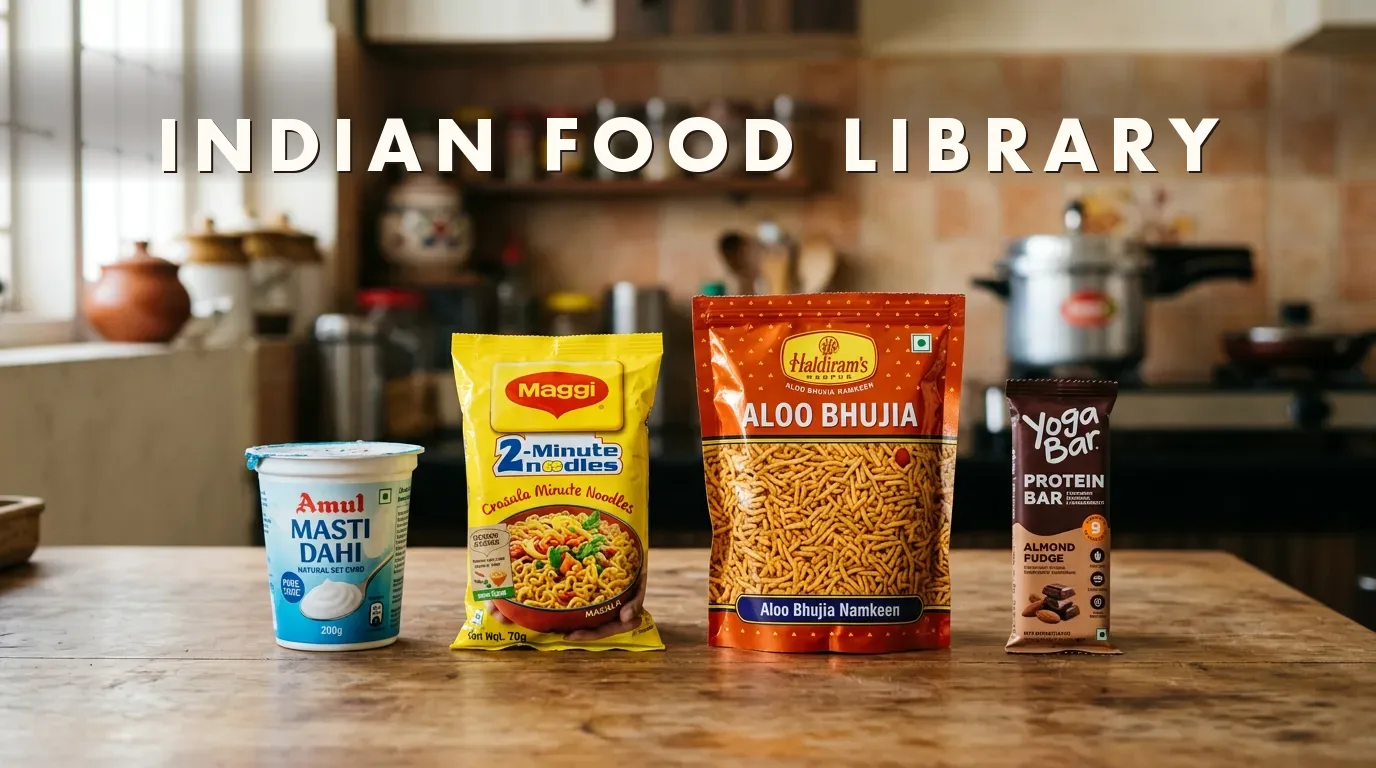
Two clients tell you the same thing: curd for breakfast. One had a plain set dahi at 40 calories per 100 g. The other had a strawberry fruit yogurt at 137, with almost four times the carbohydrate. Same word in the check-in, different food in the fridge.
A food database is the searchable list of foods your coaching app gives you to build meal plans. Almost every platform runs on one English, mostly American source, and it barely covers what an Indian client buys on a weekly grocery run. That gap is exactly why we built regional food libraries into Assistant Coach, and the Indian one is 929 branded packaged products, listed by brand, with the numbers from the pack.
| What it is | An opt-in Indian packaged food library inside your meal plan builder |
| How many foods | 929 branded products, from Amul dahi to Yoga Bar oats |
| What it covers | Packaged and branded food and drink sold in India |
| What it does not cover | Generic home-cooked dishes such as dal, roti and sabzi |
| Where the data is from | Open Food Facts, the public database of what is printed on food packaging |
| How to use it | Switch it on once in Settings; it stays off by default |
Here’s what this guide covers:
- Why a US food database fails fitness coaches with Indian clients
- What is in the Indian packaged food library
- What the Indian food library does not cover
- How personal trainers in India build a meal plan around packaged food
Why a US food database fails fitness coaches with Indian clients
The obvious problem is that the products simply are not there. Search a US-built food database for Amul, Britannia, Haldiram’s or Epigamia and you get nothing useful. So the coach builds them by hand, one at a time, for every client who eats them.
The subtler problem is brand spread. Packaged food is not a category with one set of macros, it is dozens of specific products that share a name. In this library alone, plain dahi and curd run from 40 calories per 100 g at one brand to the high 70s at another, buffalo curd sits near 80, and the fruit yogurts climb past 130. Protein swings just as hard: an ordinary dahi carries around 3 g per 100 g, while a high-protein yogurt carries 12.
That spread is invisible if you log everything as “curd”. Across a week of breakfasts and a client who is trying to hit a protein number, the difference between 3 g and 12 g is the difference between a plan that works and one that quietly does not.
The same holds for the rest of an Indian client’s packet-based eating. Namkeen and bhujia are not one food. Biscuits are not one food. One muesli at 12 g of protein per 100 g and another at 23 look identical in a check-in that says “muesli”.
What is in the Indian packaged food library
The library is 929 branded products drawn from Open Food Facts, a public database that records what is printed on food packaging, filtered to products listed for India. Every entry carries its brand, so you are choosing the specific product your client buys rather than a generic stand-in.
What that means in practice:
- The dairy shelf, by brand. Amul, Mother Dairy, Milky Mist, Heritage, Epigamia, Akshayakalpa and the regional players, covering dahi, curd, paneer, ghee, buttermilk and the Greek yogurts.
- Snacks as they are actually eaten. Haldiram’s namkeen, Balaji wafers, Kurkure, Lay’s and the Britannia and Parle biscuit aisle. Snacks are the single largest category in the library.
- The fitness aisle. Yoga Bar, The Whole Truth, Pintola, Alpino and Myfitness, covering protein bars, whey, high-protein oats and muesli, and peanut butters.
- Instant and convenience food. Maggi, Knorr soups, Nissin and the instant-noodle shelf, plus packaged staples like Aashirvaad atta.
- Drinks. Paper Boat, packaged lassi and buttermilk, protein shakes, and the soft drinks and juices clients forget to mention.
Here are a few of the products as they appear in the search, per 100 g:
| Product | Calories | Protein | Carbs | Fat |
|---|---|---|---|---|
| Amul Masti Dahi | 62 | 4.0 g | 4.4 g | 3.1 g |
| Epigamia Greek Yogurt | 69 | 7.6 g | 4.7 g | 2.2 g |
| Amul Malai Paneer | 312 | 20.0 g | 4.0 g | 24.0 g |
| Yoga Bar Protein Bar | 362 | 20.2 g | 53.8 g | 9.4 g |
| Maggi 2 Minute Noodles Masala | 437 | 10.4 g | 63.6 g | 15.7 g |
| Britannia Marie Gold | 445 | 7.9 g | 79.5 g | 10.6 g |
| The Whole Truth Peanut Butter Protein Bar | 498 | 25.0 g | 36.9 g | 27.7 g |
| Haldiram’s Aloo Bhujia | 564 | 9.0 g | 47.7 g | 37.5 g |
Two things in that table catch coaches out. Paneer is treated as a lean protein by half the clients who eat it, and at 24 g of fat per 100 g it is closer to a cheese than to chicken. And the two protein bars sit 136 calories apart per 100 g, with one carrying nearly three times the fat of the other, which is a real difference in a client eating one most days.
You switch the library on once in Settings and its foods join your meal-plan search. It is off by default, so it never clutters the search of a coach who does not need it, and your core food library stays available either way.
No other coaching platform we checked ships this. Trainerize, TrueCoach, Everfit, PT Distinction and Kahunas all rely on an English food search or a general recipe library. As far as we can verify, Assistant Coach is the only fitness coaching platform with a curated Indian packaged food library you can switch on.
What the Indian food library does not cover
This is a packaged food library, and it is worth being clear about what that excludes.
It does not contain generic home-cooked Indian dishes. There is no entry for a katori of dal, a fresh roti, or a home-made sabzi. What it has instead are the packaged versions: Aashirvaad atta rather than a rolled chapati, Amul paneer rather than home-set paneer, a boxed dal makhani rather than the one your client’s mother makes.
For home-cooked food you have two options that already work. The core food library covers the raw ingredients most Indian cooking is built from, so a dish can be assembled from rice, lentils, oil and vegetables. Or you create the composite food once, with your own numbers, and reuse it across every client who eats it.
The packaged half is where coaches guess most. A coach can usually estimate a home-cooked plate from experience. Nobody can eyeball whether a client’s protein bar is 20 g of protein or 12, or which of the four muesli boxes on the shelf they bought. That is the half this library removes the guessing from.
A library of raw Indian ingredients, built from national food composition data, is a separate piece of work and not what shipped here.
How personal trainers in India build a meal plan around packaged food
Most coaching software sold to personal trainers in India was built for a US grocery run, so the practical workflow ends up split. Use the library for the half of the plate that comes out of a packet, and your own numbers for the half that comes out of a kitchen.
In practice that means naming the product, not the category. If the plan says “curd, 150 g”, the client picks whichever tub is in the fridge and your protein target moves. If it says the specific dahi you chose, the number holds. The same goes for the evening namkeen, the muesli, and the bar your client eats after training.
Then set the home-cooked meals once. Build the client’s regular dal, sabzi and roti portions from the core food library, save the meal plan as a template, and reuse it for the next client who eats the same way. The packaged half stays accurate because it comes from labels; the cooked half stays accurate because you set it deliberately instead of guessing at a US substitute.
Frequently Asked Questions
Does Assistant Coach have Indian foods like Amul and Maggi?
Yes. Alongside its meal plan builder and core food database, Assistant Coach has an opt-in Indian packaged food library of 929 branded products. Switch it on once in Settings and Amul dairy, Britannia and Parle biscuits, Haldiram’s namkeen, Maggi noodles and Indian protein bars join your meal-plan search. It stays off by default.
Where does the Indian nutrition data come from?
The Indian library is built from Open Food Facts, a public food database that records what is printed on product packaging, filtered to products listed for India. The numbers are label values rather than laboratory measurements, which is the right source for packaged food because the label is what your client is reading.
Does the Indian food library include home-cooked food like dal and roti?
Not as generic home-cooked entries. This library covers branded packaged products, so it has Aashirvaad atta, Amul paneer and a packaged dal makhani, but not a generic serving of home-made dal or a fresh roti. For those, use the core food library or create the food once and reuse it.
Why do packaged food macros matter for Indian clients?
Because the same word covers very different products. Plain dahi from one brand is 40 calories per 100 g; a fruit yogurt from another is 137. A high-protein yogurt carries 12 g of protein per 100 g where an ordinary dahi carries 3. If a coach logs all of it as curd, the plan drifts from what the client actually ate.
Do Indian foods clutter my normal food search?
No, because the library is opt-in and off by default. Turn it on and the Indian products join your search; leave it off and nothing changes. A coach who works only with clients outside India never sees them in their results.
Is there fitness coaching software with Indian foods built in?
Assistant Coach is the one we could verify. It gives fitness coaches and personal trainers structured check-ins, a workout logger with video review, meal and workout plan builders, goals, client notes and full data export, plus an opt-in Indian packaged food library of 929 branded products. Trainerize, TrueCoach, Everfit, PT Distinction and Kahunas rely on an English food search or a general recipe library.
References
- Open Food Facts. A free, open database of food products from around the world. world.openfoodfacts.org
- Food and Agriculture Organization of the United Nations. INFOODS: International Network of Food Data Systems. fao.org/infoods
 The Regional Foods Your Coaching App Needs
 How to Build a Meal Plan Clients Actually Follow