You open a Spanish-speaking client’s meal plan to add what they actually eat. You search “garbanzos.” Nothing. You search “arepa.” Nothing. Or a US version shows up with numbers that do not match the real food. So you create it by hand, type in the macros, and move on. Then the next client eats the same garbanzos and arroz, and you do it all again.
A food database is the searchable list of foods your coaching app gives you to build meal plans. Almost every platform runs on one English, mostly American source, and it barely covers the food a client in Spain or Latin America eats every day. That gap is exactly why we built regional food libraries into Assistant Coach, and the Spanish and Latin American one is 543 foods drawn from USDA FoodData Central, curated for Spanish-speaking kitchens.
| What it is | An opt-in Spanish and Latin American food library inside your meal plan builder |
| How many foods | 543, from garbanzos and merluza to arepas and ceviche |
| Where the data is from | USDA FoodData Central, curated for Spanish-speaking kitchens |
| Who it is for | Coaches and personal trainers with clients in Spain and Latin America |
| What it replaces | Building the same Spanish and Latin American staples by hand for every client |
| How to use it | Switch it on once in Settings; it stays off by default |
Here’s what this guide covers:
- Why a US food database fails Spanish-speaking clients
- What is in the Spanish and Latin American food library
- Para entrenadores en España y Latinoamérica
Why a US food database fails Spanish-speaking clients
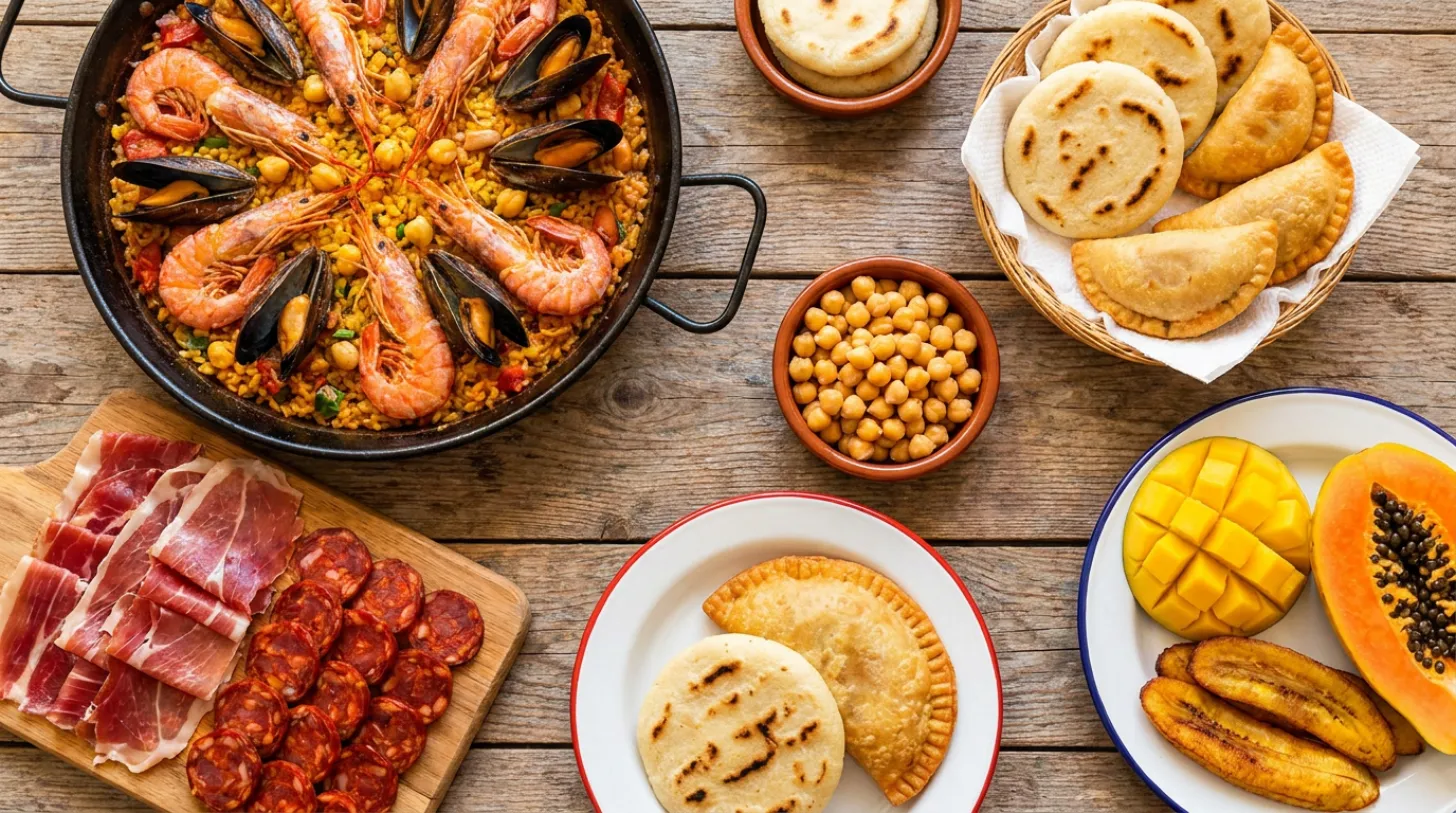
Food composition is not universal. A cut of pork or beef carries different fat depending on how the animal is raised and butchered, and cured products like chorizo and jamón have no clean US equivalent. The fish a Spanish client cooks, merluza or bacalao, may be sold under a different name and a different fat profile in a US database, and staples split by region: what a client in Madrid calls alubias, a client in Mexico City calls frijoles. Prepared dishes, the food people actually eat, are the most local of all: an arepa, a plate of tostones, or a bowl of ceviche has no single row in a US database.
So when a coach reaches for the closest US match, the errors stack up. A legume logged with the wrong carbohydrate, a cheese that is fattier or leaner than the version on the client’s table, a dish approximated from something that is not quite it. Across a week, a plan that reads clean on paper drifts off target in the client’s real kitchen. And the client never sees the data problem. They just see a plan that stops working.
The fix is not to guess. It is to put the foods a Spanish-speaking client actually eats in the search from the start, with consistent macros, which is exactly what this library does.
What is in the Spanish and Latin American food library
The library is 543 foods drawn from USDA FoodData Central and curated for Spanish-speaking kitchens. Spain’s own national table, BEDCA, is not licensable for commercial use, so rather than leave the gap, we selected and organised the foods coaches actually plan with from a source we can use.
What that means in practice:
- Proteins with the right names. Pollo, ternera, cerdo, and cordero, the everyday meats a Spanish or Latin American client cooks, plus chorizo.
- The fish and seafood clients eat. Merluza, atún, bacalao, sardinas, gambas, and pulpo, staples of both Spanish and coastal Latin American kitchens.
- Legumes and grains, the base of the plate. Garbanzos, lentejas, alubias, frijoles, and arroz in the preparations clients really eat, plus eggs and quesos.
- Tropical and Latin American fruit. Mango, papaya, guayaba, maracuyá, plátano, and aguacate, with usable macros.
- Prepared dishes. Down to arepa, empanada, tamal, tostones, ceviche, flan, and horchata, so a real meal is one search away.
You switch the library on once in Settings and its foods join your meal-plan search. It is off by default, so it never clutters the search of a coach who does not need it, and your core food library stays available either way.
No other coaching platform we checked ships this. Trainerize, TrueCoach, Everfit, and PT Distinction all rely on an English food search or a general recipe library. As far as we can verify, Assistant Coach is the only fitness coaching platform with a curated Spanish and Latin American food library you can switch on.
Para entrenadores en España y Latinoamérica
Si preparas dietas para clientes en España o en Latinoamérica, ya conoces el problema. Abres la app, buscas “garbanzos”, “merluza” o “arepa”, y no aparece nada, o aparece una versión estadounidense con unos macros que no cuadran con la comida de verdad. Así que acabas creando cada alimento a mano, uno por uno, y repites el mismo trabajo con cada cliente nuevo.
La biblioteca de alimentos de España y Latinoamérica resuelve esto. Son 543 alimentos tomados de la USDA FoodData Central y seleccionados para las cocinas de habla hispana. Aquí vamos con honestidad: la base de datos española, BEDCA, no tiene licencia para uso comercial, así que partimos de una fuente que sí podemos usar y la curamos con los alimentos que los entrenadores planifican de verdad. Ahí están las carnes con sus nombres (pollo, ternera, cerdo, cordero) y el chorizo, el pescado y el marisco (merluza, atún, bacalao, sardinas, gambas, pulpo), las legumbres y los cereales (garbanzos, lentejas, alubias, frijoles, arroz), los huevos, los quesos, la fruta tropical (mango, papaya, guayaba, maracuyá, plátano, aguacate) y platos de toda la región como la arepa, la empanada, el tamal, los tostones, el ceviche, el flan y la horchata.
En la práctica funciona así: tu cliente desayuna huevos con aguacate, come garbanzos con pollo y arroz, y tú montas el plan con esos alimentos exactos, cuadrando las metas de calorías y macros con la comida real que tiene en casa. Sin sustituciones raras, sin poner “chicken breast, 100g” en lugar del pollo que de verdad se come.
Activas la biblioteca una sola vez, en los ajustes, y sus alimentos pasan a aparecer en la búsqueda cada vez que montas un plan. Viene desactivada por defecto, así que si atiendes solo a clientes fuera de estos mercados, nunca ves los alimentos de más. No hay que activarla cliente por cliente, y tu biblioteca principal sigue disponible igual que siempre.
El objetivo no es tener una función más. Es que un plan hecho con la comida que el cliente reconoce y ya compra es un plan que sí puede seguir. Y la adherencia, al final, es lo que decide el resultado.
Frequently Asked Questions
Why doesn’t my coaching app have Spanish foods like garbanzos or arepas?
Most coaching platforms build their food search on a single English, mostly US, food database. Spanish and Latin American staples like garbanzos, lentejas, merluza, and arepas either are not in it, or appear with macros for a different food. That is why coaches end up building the same local foods by hand for every client.
Where does the Spanish nutrition data come from?
The Spanish and Latin American library is drawn from USDA FoodData Central and curated for Spanish-speaking kitchens. Spain’s own national table, BEDCA, is not licensable for commercial use, so we selected and organised the foods coaches actually plan with, from garbanzos and merluza to chorizo and plátano, from a source we can use.
Does Assistant Coach have Spanish and Latin American foods?
Yes. Assistant Coach has an opt-in Spanish and Latin American food library of 543 foods, sitting alongside the core food database. You switch it on once in Settings and these foods join your meal-plan search, with their macros. It is off by default, so coaches who do not need it never see it.
Can I build a Spanish client’s meal plan without local food data?
You can, by creating each missing food by hand, but it is slow and the hand-entered macros are only as good as your source. A curated Spanish and Latin American library removes that setup by putting garbanzos, lentejas, arepas, and the rest in the search from the start, with consistent macros.
Do Spanish foods clutter my normal food search?
No, because the library is opt-in and off by default. Turn it on and Spanish and Latin American foods appear in your search; leave it off and nothing changes. A coach who only works with clients outside those markets never sees the extra foods.
References
- U.S. Department of Agriculture, Agricultural Research Service. FoodData Central. fdc.nal.usda.gov
- Food and Agriculture Organization of the United Nations. INFOODS: International Network of Food Data Systems. fao.org/infoods
 The Regional Foods Your Coaching App Needs
 How to Build a Meal Plan Clients Actually Follow